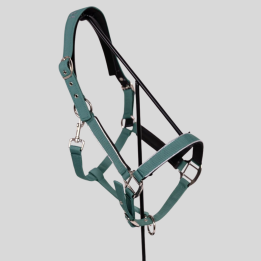
- Out-of-Stock
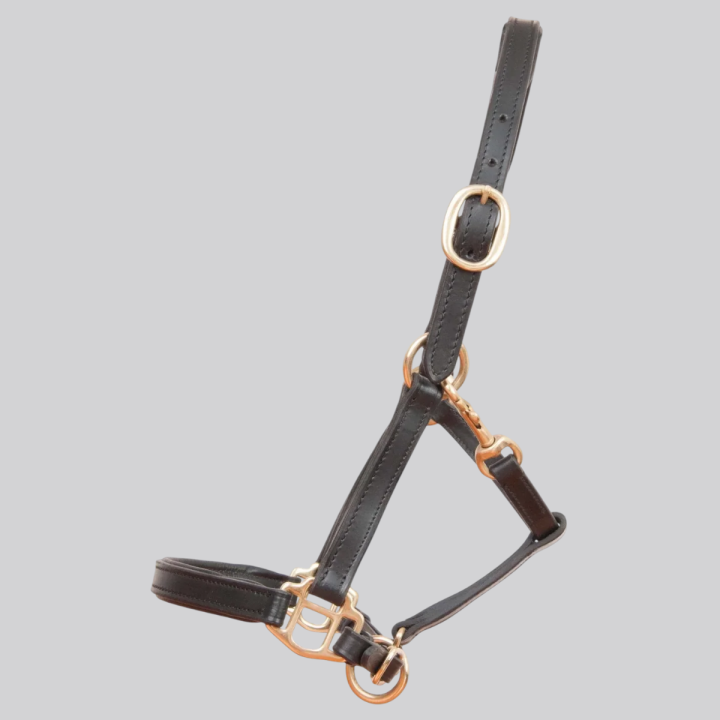
TdeT Foal leather halter images
TdeT Foal leather halter
Leather halter for foals: comfort and durability
The FoaL or Mini leather halter is specially designed for foals, mini horses and mini ponies. Made from top-quality leather, it ensures comfort and durability. The leather-lined headpiece and noseband protect sensitive areas and guarantee a secure fit.
Practical and elegant, it features an under-throat grooming snap hook and a solid brass attachment ring for easy, secure use. The solid brass buckle completes the refined style and sturdiness of this halter.
- Leather
- Brass buckle
Halter adjustment: safety and well-being for your foal
The halter is an everyday piece of equipment for grooming, caring for your horse, going out to the paddock or on the move. An ill-fitting halter can cause chafing, unnecessary pressure or risk of injury. A good fit is therefore essential.
The lined noseband: the key to fit
The noseband should be positioned about two fingers below the cheekbone.
- Too high: it can compress the bones and cause discomfort.
- Too low: it may impede breathing or slip.
Once adjusted, you should be able to pass two fingers between the noseband and the horse's nose.
The headpiece: comfort behind the ears
The headpiece should rest just behind the ears, without pressing on their base or creating tension. It should neither pull forward nor slide back. Proper adjustment avoids pressure on the nape of the neck, a very sensitive area.
Uprights: balance and stability
The uprights must be symmetrical, allowing the halter to remain centered on the head. A spinning halter is often a sign of poor fit or inappropriate size.
The throat latch: safety without constraint
The throat strap should be loose enough not to interfere with the throat or breathing. You should be able to pass a closed fist between the under-throat and the trough.
Overall check of fit
Once the halter has been fitted :
- it must not tighten or hang,
- there should be no rubbing points,
- the horse should be able to chew, breathe and move its head freely.
Care and durability of a quality leather halter
After each use, wipe off sweat and dust with a damp cloth, and perform a more thorough cleaning every 2 to 4 weeks depending on use:
- Use a mild glycerine leather soap
- Rub gently with a damp sponge
- Rinse and air dry, out of direct sunlight
- After drying, apply a leather milk or wax to nourish and soften.
Check regularly:
- Check the condition of leather, buckles and stitching
- Replace the halter at the slightest doubt to guarantee your horse's safety and comfort.
-
Brand

-
ReferenceLCF01
-
EAN133700247160259
-
UsageExternal
-
TypeHorse